I’d go back for just a moment, perhaps as long as one day and a night, enough, I think, to relish what I loved about Long Island summers:
Scents of ragweed, seared grasses, almost-too-sweet roses in the heavy summer air…
Glittering waters, hot, hot sand and tiny shells hiding in the drying seaweed margin of the tide…
Early mornings sun like a glowing peach soft-lit hazy cool ’til nearly 10…
And thunderstorms some afternoons that bruise the air and break the back of humid heat’s oppression…
Cicada-noisy nights, lit here and there by sudden silent sparks of spectral yellow, green and random like imaginings or magic, to be captured briefly in a jar…
The intensity of the Dems freaking out over Biden’s poor performance on the ‘debate’ stage is directly related to the intensity of fear and loathing they–and many of us–feel at the possibility of the Republicans’ succeeding in the culmination of their long-game authoritarian take-over of America. They’ve been working in the shadows, and not very deep ones at that, for the past 50+ years. They counted on Americans being so distracted that we would not notice what was happening until it was too late. But we did!
Now they just have to intimidate and exhaust, continue to distract, and manipulate us into thinking President Biden is a worse choice than Trump. After Biden’s lackluster performance on the ‘debate’ stage, many in the Democratic Party have reacted exactly as the Republican Party bosses want them to.
The wails and demands that Biden should step aside because he didn’t give Trump the drubbing they wanted to see offers no truly better chance with another candidate, and in fact, the best strength we have is to rally in strength behind Biden, to emphasize awareness of all the actual progress he’s cause to be made during this past 3+ years to benefit the nation. What we must not do is dither and moan and split all our votes between other even more doubtful candidates.
There are plenty of reasons to keep Biden in office, to keep his team at work for the American people, whom the Republicans have abused and neglected since Nixon. Which is not to say the Democrats are the best choice: Until we have ranked-choice voting, they will only be the better choice, better than what the Republican Party promises and threatens.
I was thinking about the writers of the US Constitution.
They didn’t have everything right, like not actually recognizing that women and people of color are actually whole human beings, and they were mostly all slave-holders. But they were the most educated men of their time. They were philosophically sophisticated, very broad-minded for their time. They were the intellectual cream of the crop–for their time.
Personal honor and integrity was basic to them, so much that they could not believe or even imagine that the Justices on the Supreme Court bench would ever be less than noble, and actively corrupt and corruptible. They did imagine, but didn’t actually seem to believe that a man like Trump could get through the system to have any chance to head the Executive Branch of the government: They wrote in a few checks to that occurance, like the ‘faithless elector’ possibility, without fully appreciating that in the actual event, no elector in the Electoral College would have the courage to exercise that right.
And so–Here we are.
The Constitution is under attack by the people in our society most entirely unlike the originators, even while they wield like a bludgeon the excised bits that seem to support their particular causes and desires.
The Supreme Court is as venal and corruptible as anyone with power to shape the nation has ever been.
The establishment of separation of Church and State is being simply ignored by the pseudo-Christians currently running amok in our government, and pretending that unquestionable Right is on their side as they force their delusional Truths into laws of child-indoctrination of the most egregious kind.
And even though none of this is happening in the shadows, none of it is hidden or disguised, the people of intelligence, integrity, and clarity are so courteous that they are doing precious little about it.
Judges can be impeached. Traitors and those who encourage them can be prosecuted. Bullies who thrive on the gentleness and politeness of their victims can be slapped down.
It is appalling that no one is making the moves to take away the stolen power from those who are actively working to end America’s great experiment in democracy.
The power we as individuals have, of course, is to vote.
Not voting is still a vote.
Voting for someone who can’t possibly win is not rebellion, it is surrender.
It’s all very well to have your own tribe, to build it up and maintain it with your own beliefs and ideas about who you are and what is your relationship with your universe, your deities, the other people you share the world with. It is beautiful to celebrate your worldview with dances and art, rituals and traditions.
But it is not all right to attempt to safeguard those things by forcing everyone else to give up their cherished beliefs, their values and connections with their own dieties, and accept yours. Getting the world to agree with you does not make you any more right. It does not validate your beliefs and traditions.
It is fear of having your stuff taken and invalidated, attacked and destroyed by those who don’t value what you do, that makes you defensive and belligerent, that makes you take and invalidate someone else’s stuff, that makes you attack and destroy those who decline to join you in your particular world.
Civilization came about so that diverse peoples could live side by side, trade together, interact, live as neighbors, thrive as all folk wish to do, grow families as most folk want to do. Tolerance of difference, acceptance, or even appreciation: connections as human to human are the basis and goal of civilization.
The planet is too small for uncivilized peoples to share. We are too close together physically, too intensely needing resources that become dearer and dearer as our numbers overrun and overwhelm the world. If we do not accept that we are not and need not all be the same, we are gonna die. Homo sapiens will go extinct, our long, long chains of family, every one of which goes back to the beginning, will end. Not when the sun novas in a few billion more years, but sooner, much sooner.
Keep the beauties of your tribe. Let everyone else keep the beauties of theirs. The only absolute rule is this: you can have your worldview as you cherish it, only if you allow me to have mine as I cherish it. If you think your god tells you otherwise, maybe you need some new prophets.
Just today I have been watching LIFE ON OUR PLANET, a new documentary narrated by Morgan Freeman I surveys the origins and progression of life on Earth. It covers in far more detail, graced with Freeman’s compelling voice, some of the very same geologic history I presented in my essay here. I am tickled by the coincidence as much as by the validation for my own words, and I heartily recommend finding this presentation of the best of our current knowledge and theory of Earth’s history.
Ironically, the warming of the Earth bringing about melting of polar ice–which decreases the salinity of polar waters thereby slowing and possibly even halting the North Atlantic Conveyer current which brings the warm Gulf of Mexico waters up past the British Isles–sets up the British Isles for winters lasting through the year, for years, as it did during The Little Ice Age–the result of the failure of the North Atlantic Conveyer back in the time of the first Elizabeth and lasted up into Victoria’s reign.
The more saline the water is, the heavier it is compared to fresher waters. That NA Conveyer is driven by the flow of those warm surface waters northwards where, normally, their salinity causes them to sink beneath the cooler, less salty arctic waters. Those waters that sank in the north then flow southwards at the bottom of the ocean, and the cycle continues. The North Atlantic Conveyer is only part of a much larger system of water movements about the whole Earth, as, logically it would, all the oceans being connected.
We live such tiny spans of time within the whole of Earth’s time, that unless we have very specialized education, most of us are at best only vaguely aware of the dynamics of this place where we live, where we keep our stuff. Humankind has lived with earthquakes, for instance, for all our generations, yet it is less than one long lifetime since we have understood ‘plate tectonics’ which tell us the why and how of earthquakes. We’ve learned only in the past couple of centuries how to understand the stories the Earth tells of itself.
And here we are today, with the dubious distinction of confronting that we ourselves, here so briefly yet so cleverly, are contributing to the next great extinction of life on Earth. Ignorance has always been one of our major flaws, and the tendency to seek our own comfort over all other considerations. Humankind, on another scale, are in a typically self-centered adolescence, on the very verge of maturity. We are up against all the selfishness, impatience, and determination to win of the adolescent, energetic and brilliant, but short-sighted.
Whatever end we bring ourselves to, and possibly a major portion of life on this Earth, the planet will go on as it has all these millions of years, changing and rebooting and creating its stories.
People love stories, not just for amusement, but to show us the way through the dark forest, the way through the terrible haunted swamp, the way to deal with monsters. Crime shows are stories about how the monsters are caught and stopped, how the monsters are made to pay for their evil, how they finally lose in the end, every time, and the world is made safe again.
A child’s world is full of monsters: Some of them are real.
If, in childhood, the monsters were never stopped, never made to face their own evil, never lost, then some part of an adult is still wandering, in doubt and shame believing in some way responsible for the wickedness of the monster– Lost in a haunted wood /Children afraid of the night/Who have never been happy or good… (WH Auden).
Crime shows give us over and over again the most terrible monsters, losing the game. At least for a while, there’s reassurance in that, a diminishment of those dark and haunting beliefs that are the remains of a dangerous childhood.
We have been operating for so long on such simplistic, egoistic notions of how the world works, our place in it, what other animals and even things are and can do… When we traded in instinct for intellect, maybe we also lost a sense of the connectedness of everything, of the wonderful intricacy of all that connectedness.
That’s what was left behind in the Garden of Eden, along with being provided for, with not having to be responsible for our own lives and livelihood: that sense and the sensation of being part of it all, being in a wider family, the great community of all life, all things.
Science has been our tool to attempt to discover how everything works, what the parameters are of life and intelligence and instinct and consciousness… Philosophy has existed since we began using our minds to wonder and imagine, trying to explain not just the how, but the why. Religion has attempted to both mystify and demystify our relationships with the rest of the Universe, adamant about getting everyone on the same page. All of these intellectual exercises have been seeking one thing: the means of controlling what affects our lives.
“If only we can discover and comprehend The Rules, and make everyone follow them, then we can work the world ourselves, we can settle comfortably into our place, and keep the friendship of whatever Gods play with our lives.”
We walked out of the Garden knowing nothing much and came out into a terrifying world: No longer the Garden, but Jurassic Park. We began our education as kindergarteners, we picked up on the most basic understandings and clung to them for our lives. We grew in knowledge and imagination, not always able to tell the difference.
Reality, being what it is, does not test every notion, every plan that we come up with, and lets us believe we are right when we are only just a little wrong, not significantly mistaken. In fact, it is so much bigger than us, we can get away with quite a bit of wrong before Reality slaps us down, and says, Think again… Call it blessing or luck, but I think there must be some force on our side that skews cause and effect in our favor, or human beings would have sillied themselves off the planet long ago.
This could go in a whole nother direction now, but the point of this conversation is not what looks after us beyond the basic rules of Nature and Reality, or what or who are the ‘parents’ of us ‘children.’ It is the wonder of this idea, that there is this vast web of life that has its own consciousness, that we have been deaf and blind to and cut off from for all the generations since we followed the temptations of the intellectual, conscious mind–curiosity, imagination, the desire for control–and that all our researches and studies, our philosophies and imaginings, our spiritual experiments are finally bringing back to the edges of our conscious awareness.
Money is a battery for storing the energies produced by human work. It’s a transformer, too, changing human work into stuff. When the potter trades pottery for the farmer’s grain, it is a device for equalizing any difference in the relative values for the goods generated by the work. In itself, it has no value, only carries the energies of things that do have real value: the affirmation and confirmation of the worker’s worth.
Money and the energy it holds can be very useful stuff.
Accumulation of lots of money allows for acquisition of very high-energy (expensive) stuff like roads and market-places and the other infrastructure and developing technologies that helps the potter and the farmer get their goods out into the world so they can feed and clothe their families and get adequate education for their kids.
That’s, of course, why taxes: Governments–central authorities–pool the smaller amounts to a large lake of an amount to accomplish things for the benefit of the larger community. Those who share in the benefits from such accomplishments, ideally, have shared in the expenses which, if you think about it, is fair.
Money comes out of a community. It is produced by a community and stored in specially-designed containers like banks. And banks are like flower pots: Money can be invested and it can grow outward from the banks like a wild vine, out into the world, join up with other vines and become global. But the basis of all money-generation is the worker and the community. So–it seems reasonable that a certain proportion of it should, even must go back into the community, to keep the energy flowing. Think of feeding the goose that lays that gold egg.
If someone diligently collects all the golden eggs but feeds the goose on the cheapest fare, or as little as possible, or simply lets it wander around eating what it can find, and takes no care of the goose to keep it strong and healthy, that is… well, stupid.
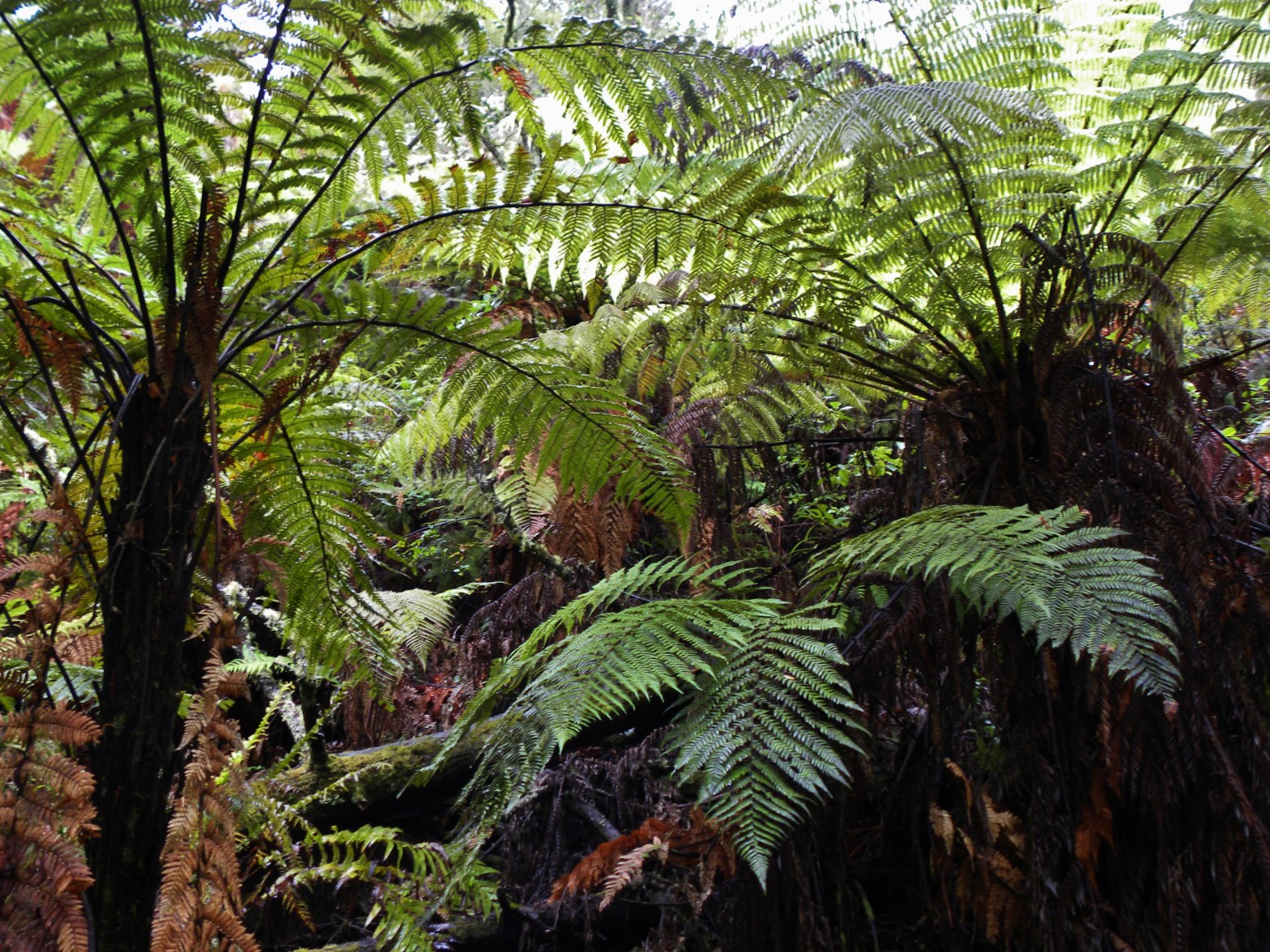
 LOOSELY SPEAKING...